

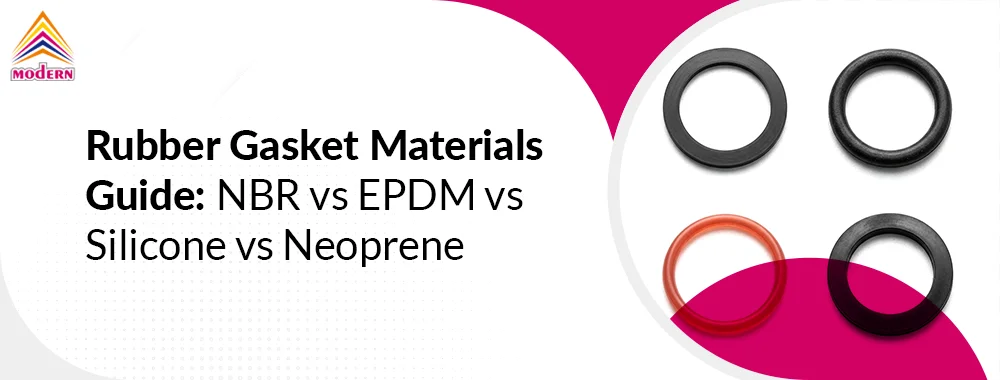
Rubber gasket is a high-quality material that comes in different types and they are commonly used in a different industry according to requirements. These are common materials used in pipelines, flanges, valves and machinery where sealing is critical. Some typical rubber gasket materials are NBR (Nitrile), EPDM, Silicone and Neoprene with each having various properties depending on the use. The choice of the material is of great importance since performance is based on such factors as the operating temperature, the exposure to chemicals, and pressure. Making a poor decision may result in leakage, breakdown, or shorter service life. This is a guide to assist you in selecting the correct material depending on your application needs.
What is Rubber Gasket Material?
Rubber gasket material is a sealing material made out of elastomer, which is used to seal a leakage between two surfaces joining together. The working principle is to squeeze under pressure to seal loopholes and form a tight fit to prevent leakage of fluids or gases when in use. Rubber gaskets are essential in the sealing applications to ensure integrity of the system, particularly in cases where vibration, pressure variations or thermal expansion are involved. They find common use in pipelines, flanges, and industrial equipment, where safe and efficient operation is necessary and ensured through reliable sealing. In the industrial context, the appropriate rubber gasket medium has a direct influence on leak prevention, equipment life and maintenance costs, and is an important factor in process reliability.
Types of Rubber Gasket Materials
The various types of rubber gasket materials are chosen depending on the working conditions in terms of temperature, exposure to chemicals and pressure. The most popular types of types in industrial use are listed below:
NBR (Nitrile Rubber) Gasket Material
NBR gasket material is also famous in terms of oil/fuel resistance and is thus used in petroleum-based applications. It is normally used at a temperature of -40 °C to 120 °C, which is reliable in moderate conditions. The NBR gaskets find application in oil systems, fuel handling equipment, hydraulic systems and in the automotive industry where hydrocarbon resistance is very important.
EPDM Gasket Material
EPDM gasket material has excellent weathering, ozone, water, and resistance against a variety of chemicals, particularly acids and alkalis. It works within a temperature range of -50 °C to 150 °C and works very well with steam applications. Because of its resistance to weather conditions, EPDM is extensively applied in water treatment systems, HVAC and outdoor sealing.
Silicone Gasket Material
Silicone gasket material is characterized by great stability in both extreme temperatures, -600 °C to 200 °C or more. It is non-toxic and flexible even in extreme conditions, and hence it is suitable for food processing, pharmaceutical and medical applications. Silicone gaskets are also considered to be flexible and resistant to environmental factors, but have low resistance to oils.
Neoprene Gasket Material
The material of the gasket, neoprene, offers moderate chemical resistance, oil resistance, and weather resistance. It normally works at -40 °C to 120 °C and hence can be used in many general-purpose applications. Neoprene is widely applied in industrial machinery, refrigeration, and general sealing applications where an all-around and economical material is needed.
Elastomer Material Comparison Table
| Material | Temperature Range | Chemical Resistance | Oil Resistance | Best Use Applications |
| NBR (Nitrile) | -40°C to 120°C | Moderate | Excellent | Oil & fuel systems, automotive |
| EPDM | -50°C to 150°C | Excellent | Poor | Water, steam, outdoor (UV/Ozone) |
| Silicone | -60°C to 200°C | Good | Poor | Food, pharma, medical |
| Neoprene | -40°C to 120°C | Moderate | Moderate | General industrial, marine use |
Temperature Resistance of Gasket Materials
The temperature resistance of the gasket material is imperative in sustaining the sealing performance under different temperatures. When subjected to temperatures that exceed the limit of a material, it may harden or crack, or lose its flexibility. Silicone is the most resistant to temperature, and thus it is applicable to extreme temperatures of either high or low. EPDM is suitable for steam and hot water applications, and in continuous heat, it is stable. Contrary to this, NBR has a smaller temperature range and can only work in moderate temperature conditions, but cannot be used in high-heat or steam conditions.
Chemical Resistance & Compatibility
The chemical resistance of this material depends on the environment it's used in contact with acids, alkalis, oils, or solvents. NBR is suitable for oil and fuel applications and offers good resistance to hydrocarbons. EPDM is highly resistant to water, steam, acids, and alkalis and does not work with oils. Silicone can withstand both mild chemicals and environmental conditions, and Neoprene has an equal stand against both oils and moderate chemicals. The selection of the appropriate material can be used to avoid the impact of degradation as well as guarantee the dependability of sealing.
How to Choose the Right Rubber Gasket Material
The rubber gasket comes in a different variety and also depends on many factors. Some of the choosing factors of this material are listed below.
Further Fresh Water Supply
A pet drinking bowl is a source of running clean and filtered water so that your cat may always have clean and fresh water. It aids in the elimination of dirt, debris, and bacteria that can be found in stagnant water bowls.
Prevention of Plaque & Tartar Buildup
A daily water fountain rinse of your cat’s mouth will assist in washing down the food particles and bacteria and lower the chances of accumulating plaque and tartar.
Increased Drinking Habits
The water flow also attracts pets, thus making them drink more. This assists in keeping hydrated and in good health.
Simple to Operate by Owners
The water fountains specifically designed to serve pets can save the hassle of having to refill the bowl as frequently as possible, and they need minimum maintenance making them an easy and cost effective solution to owners of pets.
Industrial & Application of Rubber Gasket Materials
Oil & Gas (NBR)
The NBR gasket material is extensively utilized in the oil and gas industry because of its high resistance to oils, fuels and hydrocarbons. It is best suited in pipelines, refineries, and hydraulic systems that need dependable sealing in oil-based settings.
HVAC (EPDM) Water Treatment
Water treatment plants and HVAC systems are the main areas where EPDM gasket material is employed due to its high water, steam and weather resistance. It has good outdoor and high moisture, allowing it to seal over time.
Pharmaceutical & Food Processing (Silicone)
The pharmaceutical, food and medical industries have preferred silicone gasket material because of its non-toxicity and capability to resist extreme temperatures. It guarantees hygienic sealing and is flexible in sensitive applications.
General Manufacturing & Engineering (Neoprene)
The neoprene gasket material is balanced for resistance to oils, chemicals, and environmental conditions, and is appropriate in general manufacturing and industrial machinery. It finds wide application in areas where flexibility and affordability are valuable.
Chemical Processing (EPDM / Neoprene)
EPDM and Neoprene are applied in chemical processing industries due to their resistance to acids, alkalis and moderate chemicals. These materials contribute to the integrity of sealing in challenging chemical conditions.
Generating Power and Marine (NBR / Neoprene)
The applications of NBR and Neoprene include power plants and marine applications as they are durable and resist oils, fuels, and other extreme environmental factors. They provide consistent operation in high-pressure and demanding systems.